Non-religion in Spain: exploring irreligion, spirituality and religious transformations
This team examines, from a social sciences perspective, the growth of non-religion and new forms of spirituality within the context of ongoing social change in Spain. It studies identities, practices and cultural transformations linked to non-religious affiliation.
If you would like to learn more about the project or about our research on religion in Spain and social change, you can contact the research team.
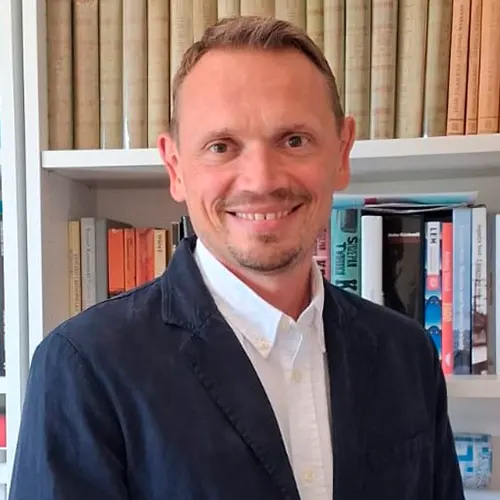
Mikolaj Stanek is Professor of Sociology in the Department of Sociology and Communication at the University of Salamanca. He holds a PhD in Sociology from the Complutense University of Madrid. Over the course of his career, he has worked at the Complutense University of Madrid, the Spanish National Research Council, and the University of Coimbra. He has served as an external expert for the European Union Agency for Fundamental Rights (FRA) and the European Migration Network (EMN). His research interests are broad and include religious change from a population perspective, population health, and migration processes.
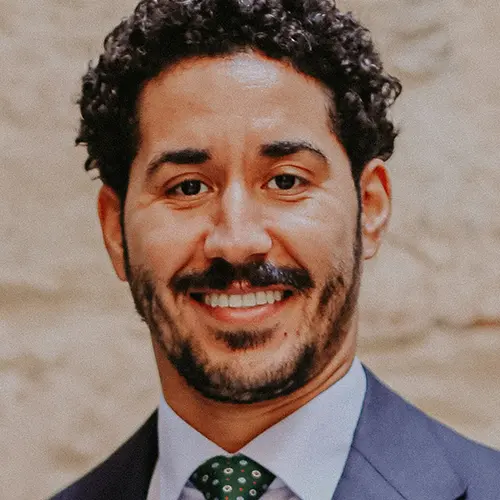
Zakaria Sajir is Assistant Professor in the Department of Sociology and Communication at the University of Salamanca and a member of the Research Group “Labour Market, Migration and Health” (M2S). He is also affiliated with the University Institute for the Sciences of Religions (IUCR) and the Analysis Group on Islam and Arab-Islamic Cultures in Transnational Contexts (GRAIS) at the Complutense University of Madrid. He holds a PhD in Sociology from the University of Leicester and previously held a Juan de la Cierva postdoctoral fellowship at the Institute of Economics, Geography and Demography (CSIC) in Madrid. Since 2025 he has served on the Executive Board of Research Committee 16 (Sociology of Religion) of the Spanish Federation of Sociology (FES), where he is Secretary. His research focuses on migration, labour exploitation, structural discrimination and the governance of religious and ethnic diversity in Europe.
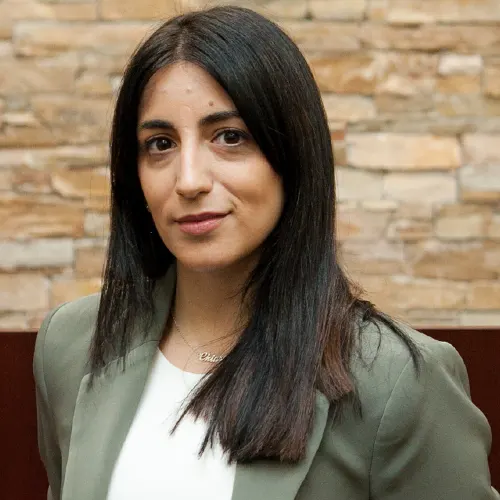
Chiara Dello Iacono is a postdoctoral researcher in Social Sciences at the University of Salamanca. She holds a diploma in Social Work and a master's degree in Public Services and Social Policies from the University of Molise (Italy). She completed her doctoral thesis within the project "Demographic convergences and divergences between natives and immigrants in Spain Demodata," funded by the Ministry of Science and Innovation. She has carried out research stays at the Department of Public Health at Stockholm University (Sweden) and with the "Interface Demography" research group at Vrije Universiteit Brussel (Belgium).
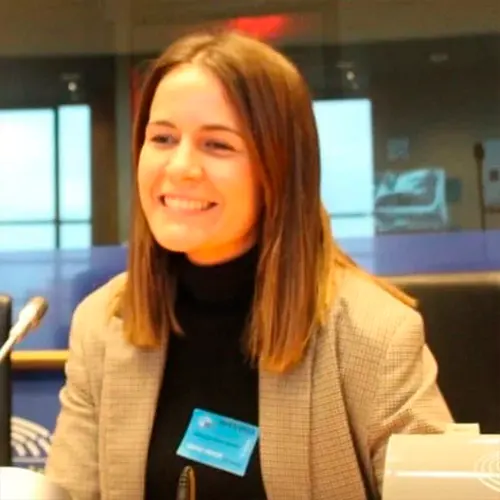
Alba Teresa González Esteban is a doctoral student in Social Sciences at the University of Salamanca. She holds a degree in Sociology from the University of Salamanca (2019-2023). She has completed a Master's Degree in Applied Sociology: Social Problems at the Complutense University of Madrid (2023-2025) and is currently pursuing a Master's Degree in Social and Educational Intervention with Children and Adolescents at the University of Salamanca (2025-2026).
Cristina Rodríguez Reche is a social anthropologist and postdoctoral researcher at the Department of Political and Social Sciences, UPF. She is a member of the INMIX-UAB research group (2021SGR-181, Universitat Autònoma de Barcelona), where she studies migration, racialization, mixedness, social cohesion, and everyday experiences of discrimination. Her work combines ethnographic and critical approaches to examine how race, belonging, and coexistence are negotiated in local contexts. She has published in journals such as Migraciones, Social Compass, Sociology Compass, and Ethnicities, and collaborates with international networks focused on diversity and social justice, including RACED SC (IMISCOE) and EUARE.
Miguel Requena (PhD, Complutense University of Madrid) is Professor of Sociology in the Department of Social Structure at UNED (National University of Distance Education, Madrid, Spain) and a member of the Population and Society Research Group. He has been a member of the Technical Corps of the Centre for Sociological Research (CIS), an Associate Researcher at the Institute of Advanced Social Studies–Spanish National Research Council (IESA-CSIC), a Senior Associate Member at St Antony’s College, University of Oxford, and a Visiting Professor at Hamilton College, Princeton University, and Stanford University. His research interests include demography, family, social structure, and social change.
Carmen is a postdoctoral researcher in the psychology of religion at the University of Navarra, currently in her second postdoctoral appointment. Her first postdoc was part of a Templeton Foundation-funded project on the psychological foundations of divine forgiveness. She holds a BA in Philosophy, two MAs (Education; Cultural and Religious Studies), and a PhD in Psychology from the University of Granada on cultural and religious conceptions of time. She has held research stays at UCSB (Fulbright), Boston University, Harvard, and other institutions. Her current work focuses on forgiveness, well-being, lived religious experience, and fostering open, transparent, and reproducible scientific practices.
I research and photograph our relationship with death, with a particular interest in the intersection between finitude and religion. I hold a double degree in Political Science and Sociology from the Autonomous University of Barcelona, as well as a master’s degree in Anthropology and Ethnography from the University of Barcelona. I am affiliated with ISOR-UAB (Investigations in the Sociology of Religion) and collaborate with GREMHER-UB (Research Group on Mysticism and Religious Heterodoxies). My doctoral thesis is carried out under a research contract linked to the R&D&I project RECHANGE (Non-religion in Spain: Exploring irreligion, spirituality, and religious transformations).